
26 Feb Relationship Between Autism and Music: A Complete Guide
Music has a special ability to express emotions that words cannot describe.
For autistic children, music serves as more than entertainment because it helps them find comfort, express themselves, and build social bonds.
Many parents searching for does music help autism often observe that children who have difficulties with communication and emotional regulation show strong responses to melodies, rhythms, and familiar songs.
Researchers, therapists, and families continue to explore how does music affect autism and how sound can support emotional, social, and developmental growth.
Today, alongside traditional approaches like speech therapy and autism treatment in patna, music-based interventions are gaining recognition for their supportive role in child development.
Understanding Autism and Sensory Processing
Autism, or Autism Spectrum Disorder (ASD), is a neurodevelopmental condition characterized by differences in social communication, repetitive or restricted behaviors, and sensory processing.
It’s a spectrum, so how it presents varies widely from person to person.
How Autism Affects Communication, Behavior, and Sensory Response
Autism Spectrum Disorder (ASD) affects how a child understands and responds to the world.
Communication may differ from typical patterns, as some children use limited speech and prefer gestures or nonverbal methods.
Social interactions can become challenging, especially in unfamiliar or busy environments.
Many autistic children experience sensory processing differences.
Sounds, lights, textures, and touch that seem normal to others may feel overwhelming or uncomfortable to them.
The brain may struggle to process sensory input properly, which can lead to anxiety, frustration, emotional outbursts, or withdrawal.
These reactions often occur because the environment provides excessive stimulation.
Understanding this helps caregivers respond with patience rather than correction.
Sensory Sensitivity to Sound, Rhythm, and Vibration
Sound sensitivity is common in autism. Sudden noises such as alarms, traffic, or loud conversations may feel painful or frightening.
However, not all sounds create distress.
Many children are naturally drawn to rhythm, vibration, and musical tones.
Steady beats, repeated melodies, and gentle humming often provide comfort.
Rhythm creates a sense of order, while vibrations from instruments like drums can feel grounding.
This is why many parents ask, can music help with autism when they notice their child responding positively to structured sounds.
Why Structured Sound Can Feel Safer Than Unpredictable Noise?
Structured sound feels safer because of its predictability.
Music follows patterns, rhythms, and repeated sequences.
The autistic brain often processes structured patterns more easily than random noise.
When a child can anticipate what comes next in a song, it reduces sensory overload and builds a sense of control.
This predictability makes music different from sudden environmental sounds.
Over time, music can become a sensory anchor — something steady and reliable in an otherwise overwhelming world.
Why Music Connects Well with Autistic Brains?
Predictability and Repetition in Music
Many autistic children prefer structured environments, and music naturally provides predictable patterns.
Songs contain repeated lyrics, rhythms, and melodies that allow the brain to anticipate the next part.
Unlike spoken language, which can shift quickly and feel unpredictable, music maintains a steady rhythm that feels organized and safe.
Because of this, many families wonder, does music help autism by reducing anxiety and improving engagement.
The repetition in music lowers mental strain and creates familiarity, which often leads to emotional comfort.
Rhythm and Pattern Recognition Strengths
Research suggests that many children with autism have strong pattern recognition abilities, including recognizing rhythm and timing.
Musical repetition reduces cognitive demand and supports attention.
Familiar songs can become a source of safety, helping children remain calm and open to interaction.
Clapping, tapping, or moving with music allows children to participate without needing advanced verbal skills.
This strength-based engagement builds confidence and encourages focus.
This is one reason why structured musical programs are now included in approaches such as music therapy for autism in India, where rhythm-based interventions support developmental growth.
Emotional Processing Through Non-Verbal Channels
Many autistic children find it difficult to express emotions through spoken language.
Music provides a non-verbal pathway for emotional expression.
A child may hum when happy, tap quickly when excited, or sway gently when calm.
These responses offer insight into their internal emotional state.
Music allows children to experience and express emotions without needing to label them verbally.
For parents asking, how does music affect autism emotionally, the answer often lies in this safe, word-free emotional outlet.
Brain Areas Activated by Music
Music activates multiple areas of the brain, including regions responsible for emotion, memory, motor control, and attention.
This whole-brain activation supports learning and emotional stability.
Because music engages multiple systems simultaneously, it can enhance focus, improve sensory regulation, and support behavioral control more effectively than single-sensory activities.
This has led many families to explore does music therapy help autism as part of a comprehensive support plan.
Benefits of Music for Children with Autism
Music offers significant benefits for children with autism spectrum disorder (ASD), especially via structured music therapy by trained professionals.
Many autistic children respond positively to music, finding it motivating, enjoyable, and low-pressure.
Here are the main evidence-based benefits:
1. Emotional Benefits
Music creates a sense of calm and emotional safety for many children with autism.
Soft melodies and steady rhythms can reduce anxiety and stress during overwhelming situations.
When verbal expression feels difficult, music provides a gentle way to release emotions.
A child may sing, hum, or move to communicate feelings they cannot describe.
Familiar songs become comforting tools during routine changes or emotional distress.
This is one reason families researching what is music therapy for autism discover that emotional regulation is one of its primary goals.
2. Communication Benefits
Music naturally encourages vocal expression.
Children may begin by making sounds, which gradually develop into clearer vocal patterns. Repetitive song lyrics introduce new vocabulary in an engaging way.
Music transforms communication into an enjoyable activity rather than a pressured task.
Many parents exploring supportive options alongside autism treatment in patna are increasingly considering music-based techniques to strengthen listening and speech development.
3. Behavioral Benefits
Music can improve focus and attention during daily activities.
Rhythmic patterns help children stay engaged for longer periods.
Predictable musical experiences may reduce meltdowns by providing emotional structure and stability.
Songs used during transitions help create smoother movement between tasks.
This structured support explains why professionals often recommend music therapy in Patna as part of a broader developmental approach.
4. Social Benefits
Music encourages natural interaction without pressure.
Shared musical experiences allow children to connect without forced conversation.
Musical games promote turn-taking and cooperation through rhythm imitation and group participation.
Music creates a shared point of attention, helping children feel included and confident in social environments.
This is why many families ask, can music help with autism in social development — and often observe meaningful progress through guided musical engagement.
What Is Music Therapy for Autism? Definition
Music therapy functions as a structured therapeutic approach that uses music with specific goals to help autistic children develop emotional regulation, communication skills, behavioral stability, and social interaction.
It is not simply listening to music for enjoyment.
Instead, it is a guided intervention designed to support developmental growth.
Many parents exploring the relationship between autism and music discover that structured musical engagement can significantly improve emotional expression and interaction.
In clinical settings, music therapy autism spectrum disorder programs are carefully designed to match the child’s individual strengths, challenges, and sensory preferences.
So, in conclusion, the answer lies in its purposeful use of rhythm, melody, and interaction to achieve measurable developmental goals.
Difference Between Passive Listening and Therapeutic Use
Passive listening involves playing music in the background to create relaxation or a calming atmosphere.
While this can reduce stress, it does not target specific developmental objectives.
Therapeutic music use, however, requires active participation.
Children may sing, play instruments, move to rhythms, or respond to musical cues.
Each activity is designed with intention — whether to improve communication, enhance attention, or encourage social interaction.
Because of this structured approach, many parents wonder, does music therapy work for autism.
Research and clinical practice suggest that when guided by trained professionals, it can produce meaningful progress in emotional and behavioral regulation.
Role of Trained Music Therapists
Music therapy should be conducted by certified professionals who understand both music and child development.
These therapists assess the child’s abilities, sensory sensitivities, and emotional responses before creating personalized session plans.
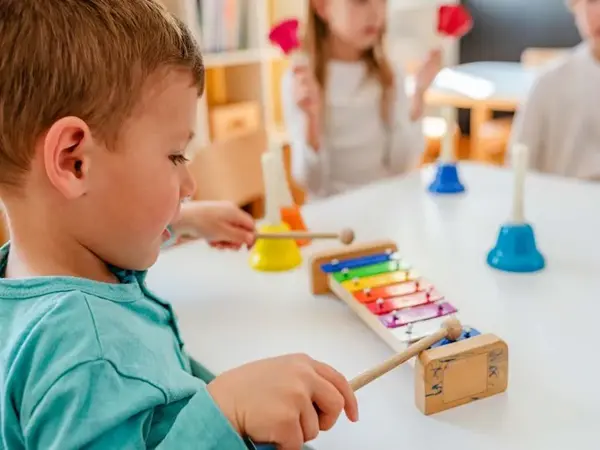
Sessions may include rhythm imitation, vocal play, or the use of autism and musical instruments such as drums, xylophones, or keyboards to encourage expression and coordination.
Therapists continuously observe how the child responds and adjust tempo, volume, and activities accordingly.
For families searching for music therapy for autism near me, it is important to choose qualified professionals who use evidence-based approaches tailored to each child’s needs.
Evidence-Based Approach
Is music therapy effective with autism – research has shown that it is no longer just a question but an area supported by growing evidence.
Studies indicate improvements in communication, emotional regulation, focus, and social engagement.
Documented music therapy for autism benefits include reduced anxiety, improved eye contact, better turn-taking skills, and increased verbal attempts in some children.
These outcomes are particularly meaningful in both early childhood and adolescence.
Music activates multiple brain regions responsible for emotion, memory, motor skills, and attention.
Because of this whole-brain engagement, autism and music therapy programs are often included alongside speech therapy, occupational therapy, and behavioral interventions.
Interestingly, children with high-functioning autism and music abilities may demonstrate strong pitch recognition, memory for melodies, or rhythm skills, which therapists use as strengths to build confidence and communication.
Types of Music Therapy Activities
Music therapy includes various structured activities that help children develop emotional, communication, behavioral, and social skills.
These activities are adapted to the child’s developmental level and sensory comfort.
1: Singing and Vocal Play
Singing and vocal play allow children to explore sounds without pressure.
A child may hum, repeat simple words, or imitate sounds within a song.
This process builds vocal confidence and supports early speech development.
Therapists often use familiar autism music therapy songs with repetitive lyrics because repetition improves engagement and memory retention.
Through this process, many families begin to understand how can music help children with autism improve communication in a natural way.
2: Instrument Play (Drums, Xylophone, Piano)
Instrument play provides a physical outlet for emotional expression.
Drums create grounding vibrations, while instruments like the xylophone or piano improve hand-eye coordination and fine motor skills.
The use of structured autism and musical instruments helps children understand cause and effect — when they press a key or strike a drum, a sound is produced.
This interactive learning strengthens focus and sensory integration.
3: Movement with Music
Movement-based activities include clapping, swaying, dancing, or marching in rhythm.
These exercises improve body awareness, balance, and motor coordination.
Music-supported movement can also reduce excess energy and support emotional regulation.
Through repeated rhythmic practice, children gain better control over transitions and structured routines.
4: Rhythm Imitation Games
Rhythm imitation games require children to copy beats through clapping, tapping, or drumming.
These games improve listening skills, memory, and attention span.
They also teach turn-taking in a natural and enjoyable way, supporting social development without forcing verbal interaction.
5: Song-Based Communication Exercises
Songs that include repeated phrases or actions help children learn to communicate needs, emotions, and responses.
Because music feels safe and predictable, children often participate more willingly than in direct verbal exercises.
These structured musical interactions further demonstrate the positive relationship between autism and music, where rhythm becomes a bridge for communication.
Choosing the Right Type of Music
Picking the right music for children with autism is different for each child.
How they react to music depends on their senses, likes, and what they need (like calming them down or encouraging them to interact).
Music therapists suggest choosing music based on careful watching of the child, often starting with what the child already likes to keep them interested and help them the most.
1: Selecting Suitable Musical Selections
Every autistic child responds differently to sound, so choosing appropriate music is essential.
What feels calming to one child may feel overstimulating to another.
Understanding the unique connection between high-functioning autism and music or varying sensory preferences helps caregivers make informed choices.
2: Calm vs Stimulating Music
Calm music with slow rhythms and soft melodies is helpful during anxiety or sensory overload.
Stimulating music can increase alertness and engagement but should be used carefully for children sensitive to loud or fast-paced sounds.
Structured therapeutic programs under music therapy autism spectrum disorder guidelines ensure that the music selected aligns with developmental goals and emotional comfort.
3: Instrumental vs Lyrical Music
Instrumental music may feel easier for some children because it removes the pressure of processing language.
However, lyrical music with gentle repetition can support speech and vocabulary growth.
Careful selection supports the overall goals of music therapy for autism benefits while maintaining sensory comfort.
4: The Impact of Volume
Volume plays a crucial role in comfort. Even soothing music can become distressing if played too loudly.
Music should remain at a soft, consistent level to prevent overstimulation.
5: Observing the Child’s Response
Caregivers should observe how the child reacts.
Signs of comfort include relaxation, engagement, smiling, or calm movements. Covering ears, agitation, or withdrawal may indicate discomfort.
Monitoring reactions ensures that the approach aligns with the principles of autism and music therapy — supportive, personalized, and responsive.
6: Personal Preference Takes Priority
A child’s personal preference is more important than musical complexity.
Familiar songs often create emotional reassurance and safety.
This personalized approach strengthens the therapeutic value of music and reinforces the meaningful connection within the broader relationship between autism and music.
Research and Evidence Behind Music and Autism
Research shows that music therapy produces positive outcomes for children with autism.
Many parents searching for does music help autistic children often find growing scientific evidence supporting its benefits.
Multiple studies suggest that structured musical interventions can improve…
- communication skills
- emotional expression
- social interaction, and
- attention span
Brain imaging research shows that music activates several areas of the brain, including regions responsible for emotional response, memory, movement, and language processing.
This whole-brain engagement helps strengthen neural connections, making it easier for children to learn and regulate behavior.
Researchers studying how can music help children with autism have found that rhythm-based training improves timing skills, attention control, and motor coordination.
Structured rhythm exercises can also support balance and body awareness.
Evidence further suggests that carefully designed music therapy for autism activities help improve eye contact, turn-taking skills, and shared attention.
These social gains are especially important for children who struggle with interactive communication.
Another important finding is that music can reduce anxiety and sensory overload.
The predictable and repetitive nature of music makes it easier for autistic children to process compared to spontaneous spoken language.
This calming structure supports emotional regulation and decreases behavioral distress.
Professionals continue exploring how does music therapy help children with autism in both clinical and home settings.
Research indicates that consistent, structured sessions led by trained therapists show measurable developmental progress over time.
Overall, current findings suggest that music therapy helping autism is not just theoretical but supported by evidence when implemented appropriately and consistently.
When to Seek Professional Music Therapy?
Professional music therapy should be considered when a child with autism faces challenges in communication, emotional regulation, behavior, or social interaction.
Music therapy provides a gentle and supportive approach for children who experience…
- anxiety
- meltdowns
- sensory overwhelm, or
- difficulty expressing emotions verbally.
Parents often begin exploring therapy after noticing their child’s natural interest in rhythm or melody.
In such cases, structured sessions can channel that interest into developmental growth.
Families who wonder does music help autistic children may consider professional guidance when traditional verbal therapies feel stressful or when progress seems slow.
A trained music therapist first assesses the child’s strengths and challenges, then creates personalized sessions aligned with specific goals.
These sessions may include singing, instrument play, rhythm imitation, and movement-based exercises.
Such carefully structured music therapy for autism activities are designed to improve focus, communication, and emotional stability.
Music therapy can support smoother transitions between activities, enhance attention span, and strengthen social engagement in a safe, non-threatening environment.
It can be beneficial for children of different age groups and developmental levels.
How Pratap Neuro & Child Psychiatry Clinic Autism Center in Patna Makes a Difference?
Every child with autism has unique strengths and challenges.
At Pratap Neuro & Child Psychiatry Clinic, care begins with careful understanding, not assumptions.
Guided by Dr. Vivek Pratap Singh, an experienced child psychiatrist in patna, each child receives a personalized evaluation that focuses on communication patterns, behavior, emotional needs, and sensory sensitivities.
As a well-established autism therapy center in Patna, the clinic follows a structured yet flexible approach.
Therapy plans are designed according to the child’s developmental stage.
They may include…
- Behavioral strategies
- Parental counseling
- Structured music therapy for autism activities
- Support for attention, emotional balance, and social skills
Being a dedicated autism center in Patna, the goal is not simply symptom management but long-term developmental growth.
Families are actively involved in the process, ensuring that therapy techniques can also be continued at home.
Through compassionate care and evidence-based intervention, the clinic strives to create a safe space where children can build confidence, improve communication, and move toward greater independence.
Conclusion
Music does not attempt to fix or cure autism; instead, it supports the child as they are.
It provides a safe and non-verbal pathway for emotional expression, communication, and connection.
For many children, music becomes a secure space — a language of feelings and a bridge toward social interaction.
Research continues to explore how can music help children with autism, and growing evidence suggests meaningful emotional and developmental benefits.
When thoughtfully applied, whether at home or in structured therapy sessions, music can build confidence, encourage learning, and promote joyful growth in autistic children.
FAQs
1. What Is Looping in Autism?
Looping describes the behavior of repeating words, sounds, songs, or physical movements.
Autistic individuals use these repetitive actions because they provide a sense of safety and emotional control.
Looping creates comfort by offering predictable patterns, which help during stress or sensory overload.
This behavior acts as an automatic coping mechanism and is not performed deliberately.
2. What Are the Most Common Obsessions in Autism?
Autistic children often develop intense interests in particular subjects or routines.
Some may focus strongly on numbers, music, patterns, specific characters, or repeated activities.
These focused interests help children feel secure and engaged.
With positive support, these interests can be transformed into effective learning tools and developmental strengths.
3. Can a Child with Autism Become Normal?
Autism is not a condition that needs to be cured.
Every child with autism develops in their own unique way, with distinct cognitive abilities, learning styles, and social patterns.
With appropriate therapy, support, and understanding, children can build essential life and social skills.
They can grow into independent individuals while embracing their individuality.
4. What Kind of Music Calms Autism?
Soft instrumental music with slow rhythms and familiar melodies often has a calming effect.
Many parents find that classical music for autistic children can provide gentle structure and emotional comfort.
Choosing the right calming music for autism child depends on personal preference, as familiar and soothing sounds help reduce anxiety and sensory overload.
5. What Is the 6-Second Rule for Autism?
The 6-second rule encourages caregivers to pause briefly before responding to a child.
This pause gives the child extra time to process information and respond.
Many autistic children require slightly longer processing time.
Practicing patience in this way helps reduce stress and improves communication and interaction.
6. Does Music Help Autistic People Focus?
Yes, music can help autistic people focus, especially when it has a steady rhythm and predictable structure.
Calm and familiar music may reduce sensory distractions and improve attention during learning or daily activities.
No Comments